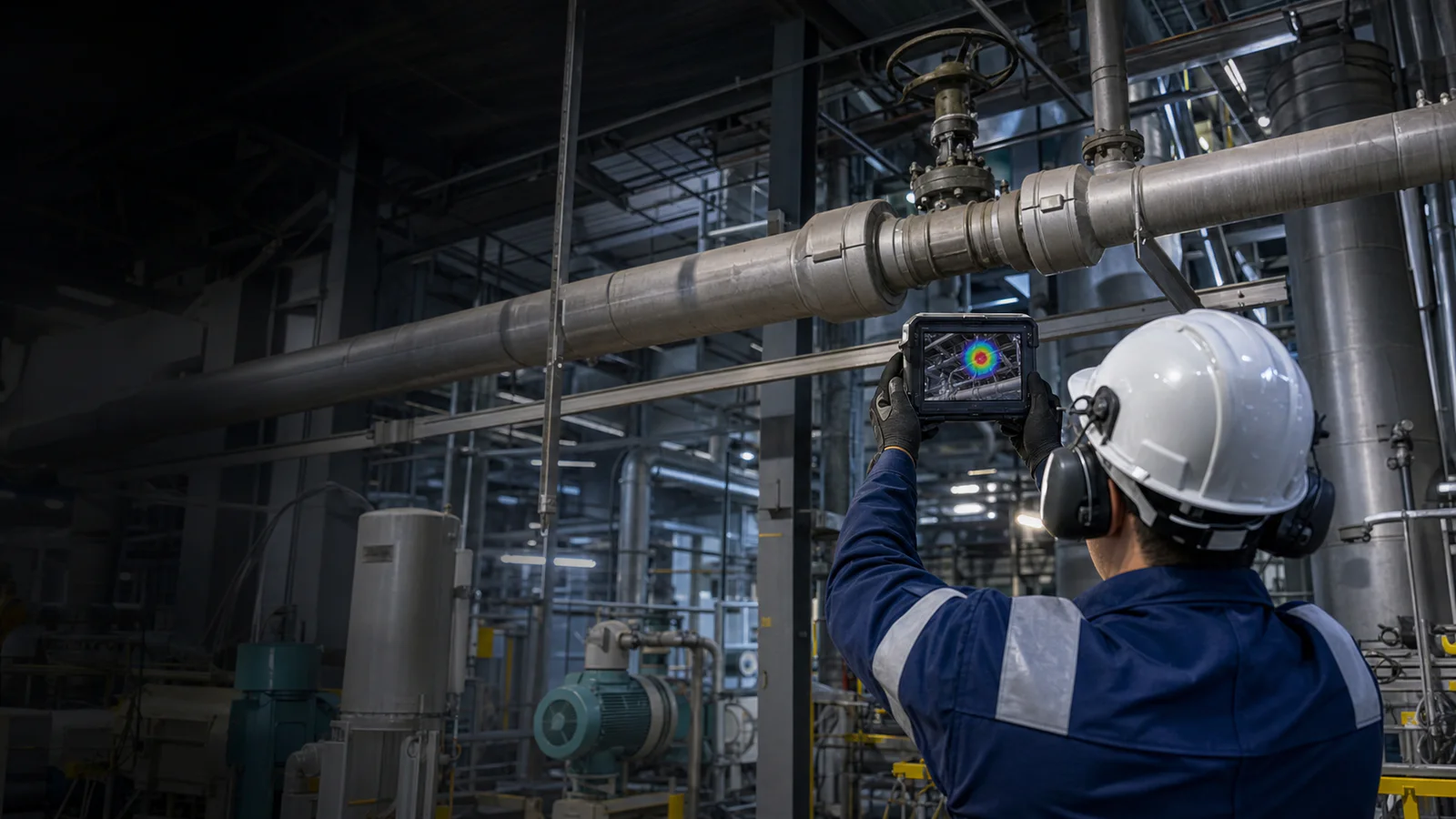
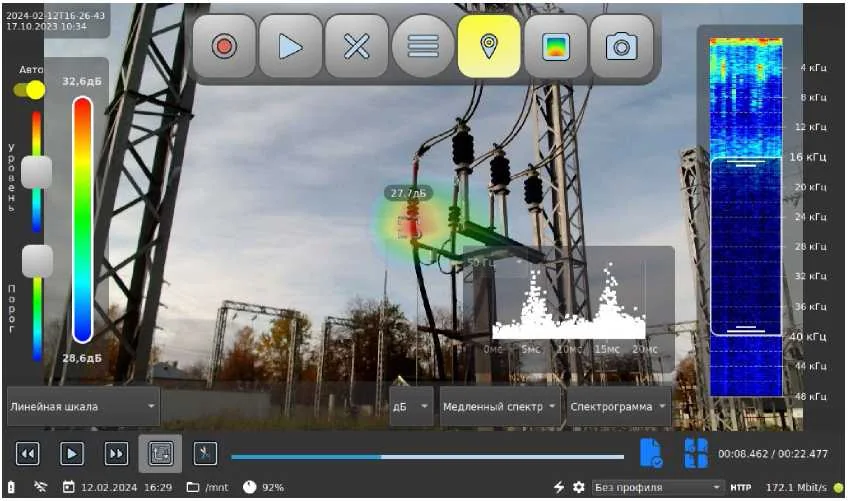
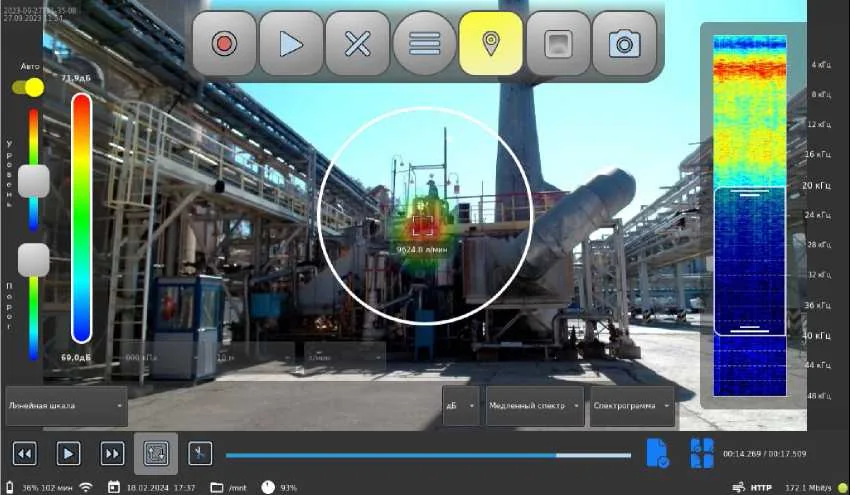
Make faults, leaks and partial discharge visible through sound detection.
AYSAV Technology Team
Product Description
A camera that turns the inaudible into an image.
An acoustic camera is a device that visualizes sound waves in real time. Its array of many microphones locates sound sources and shows them as a colored map on the camera image.
Pressurized gas and vacuum leaks, electrical partial discharges and mechanical faults in equipment can therefore be detected without contact while the facility keeps running.
Principle of operation
Capturing sounds: the acoustic camera picks up sound signals from the object with its microphone array.
Analysis and visualization: the information is processed in real time and the location of the sound source is displayed on the screen.
Detection of pressurized gas leaks and vacuum leaks
Search for and localization of partial electrical discharges
Detection of mechanical faults in equipment
Industrial safety control
Key benefits
Accuracy: ensures accurate detection and localization of noise and fault sources.
Efficiency: allows contactless monitoring without stopping the equipment.
Safety: helps keep personnel safe by taking measurements at a distance.
Scale of sound frequencies
Depending on the task, NAC acoustic cameras detect faults that occur in different frequency ranges. Audible sound lies between 20 Hz and 20 kHz; sounds above 20 kHz are ultrasonic.
Mechanical faults: occur between 1 kHz and 10 kHz while equipment is running; monitored with the stationary (NAC-SA) and portable (NAC-TA) acoustic cameras.
Leaks and partial discharges: pressure leaks, vacuum leaks and partial discharges occur in the ultrasonic range; detected with the portable ultrasonic camera (NAC-PU).
Models
The NAC family consists of three models. The stationary camera monitors critical equipment 24/7; the portable models are used for planned inspections. NACEx versions are explosion-proof for areas with an explosion risk.
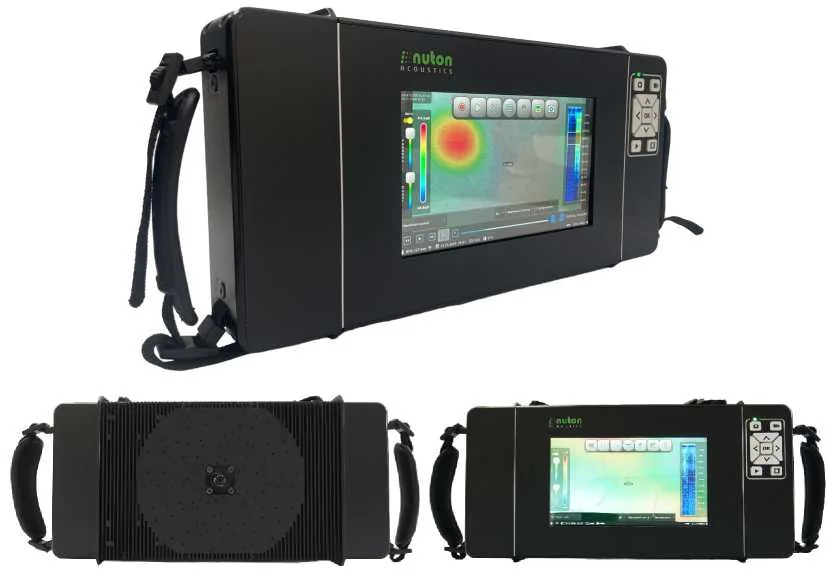
NAC-PU / NACEx-PU, portable ultrasonic camera: detection of electrical discharge activity, pressurized gas leaks and leaks in vacuum systems.
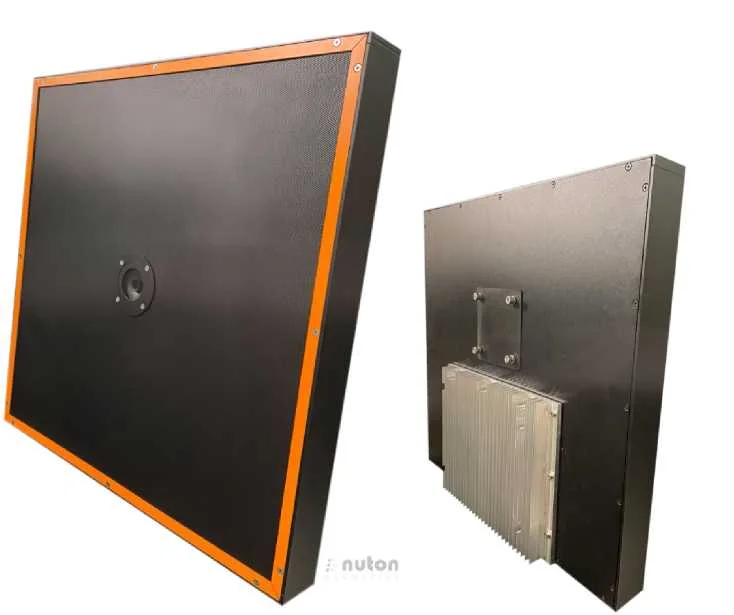
NAC-SA / NACEx-SA, stationary acoustic camera: configuration for specific critical equipment, several monitoring points, trend tracking in the acoustic image and integration with existing monitoring systems.
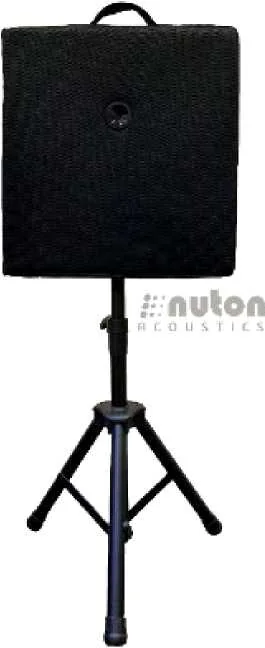
NAC-TA, portable acoustic camera: detection of acoustic anomalies and their location, storing equipment condition data for later tracking and reporting of analysis results.
NAC-PU portable ultrasonic cameraNAC-SA stationary acoustic cameraNAC-TA portable acoustic camera
Choosing the right model
The model is chosen according to the task to be solved:
Searching for gas leaks in pressurized systems, leaks in vacuum systems or partial electrical discharges: portable ultrasonic camera (NAC-PU).
Detecting mechanical faults where critical equipment requires 24/7 monitoring: stationary acoustic camera (NAC-SA).
Tracking mechanical faults through planned inspections: portable acoustic camera (NAC-TA).
Technical specifications
NACEx-PU values are taken from the Turkish data sheet (v.20240910); NAC-SA and NAC-TA values are taken from the product presentation.
Real-time and post-processing display, microphone self-diagnostics, area highlighting, sound map, streaming
Display
7-inch capacitive touch screen, 1024 × 600
Camera
1920 × 1080 (Full HD), 4x digital zoom
Data storage
1 TB; up to 10 hours of recording and 20,000 measurements; JPG, MP4 and NACF formats
Interfaces
Wi-Fi, Ethernet, USB Type-C (PC connection and charging), USB Type-A (external media)
Operating time / charging time
5 hours / 4 hours
Analysis and reporting software
Aura SVS
Dimensions and weight
320 × 155 × 55 mm, 2.3 kg
Ingress protection
IP54
Explosion protection (NACEx-PU)
1Ex eb ib mb IIC T4 Gb X; Ex tb ib mb IIIC T135 °C Db X
Operating temperature and humidity
-20 °C to +40 °C; 95% relative humidity at 35 °C (non-condensing)
Tripod mount
1/4-inch screw
Operating system
Linux
Warranty
12 months
Scope of delivery
Device, 2 wrist straps, shoulder strap, power supply, protective case, USB cable, user manual
NAC-SA / NACEx-SA stationary acoustic camera
Number of microphones
50 MEMS digital microphones
Operating frequency range
20 - 20,000 Hz
Acoustic field of view
70°
Detection distance
0.3 - 50 m
Sound pressure display
Maximum sound on screen, in real time and in post-processing
Network interface
IEEE 802.3ab 1000Base-T, RJ45
PoE support
IEEE 802.3at (Type 2), 42 - 57 V DC, up to 25.5 W
Ingress protection
IP42
Operating temperature
-20 °C to +40 °C
Dimensions and weight
455 × 440 × 76 mm, up to 10 kg
Explosion protection (NACEx-SA)
1Ex e [ib] mb IIB T4 Gb
NAC-TA portable acoustic camera
Number of microphones
49 MEMS digital microphones
Operating frequency range
20 - 20,000 Hz
Acoustic field of view
70°
Detection distance
0.3 - 50 m
Sound pressure display
Maximum sound on the laptop screen, in real time and in post-processing
Power supply
From a laptop via USB
Ingress protection
IP20
Operating temperature
+1 °C to +55 °C
Dimensions and weight
510 × 500 × 45 mm, up to 6 kg
Operating modes
The portable ultrasonic camera (NAC-PU) works in two modes:
Electric discharge mode: locates partial electrical discharges and builds a PRPD chart.
Leak mode: locates a pressurized gas leak or a vacuum leak and shows the leak rate numerically.
Electric discharge modeLeak mode
Continuous monitoring with stationary cameras
Stationary acoustic cameras placed in each monitoring area connect to a storage and monitoring server through a PoE switch; all areas are followed from the monitoring center.
Comparison with other inspection methods
Vibration analysis: used for contact diagnostics of mechanical faults, while the acoustic camera measures sound waves without contact.
Gas analyzers: work for a specific gas type and have low efficiency in open areas; the gas type does not matter to the acoustic camera, which detects leaks at a distance.
Infrared (IR) cameras: detect faults that cause overheating; not suitable for faults that do not change the temperature significantly.
UV cameras: can show the location of a partial discharge but cannot determine its type; not used for detecting mechanical faults.
Impact of implementation
Extends the service life of equipment and systems.
Prevents unplanned downtime.
Increases employee safety.
Reduces the time required for maintenance.
Reduces gas and electricity losses.
Offers a simple, easy-to-use interface.
Application areas
The versatility of the technology gives it a wide range of applications.
Gas and energy
Oil and gas industry, refineries
Petrochemical and chemical industry
Metallurgy and assembly
Electrical products and high-voltage equipment
Hydrogen storage facilities and lines
Gas storage and pressurized systems
Vacuum systems in composite material manufacturing
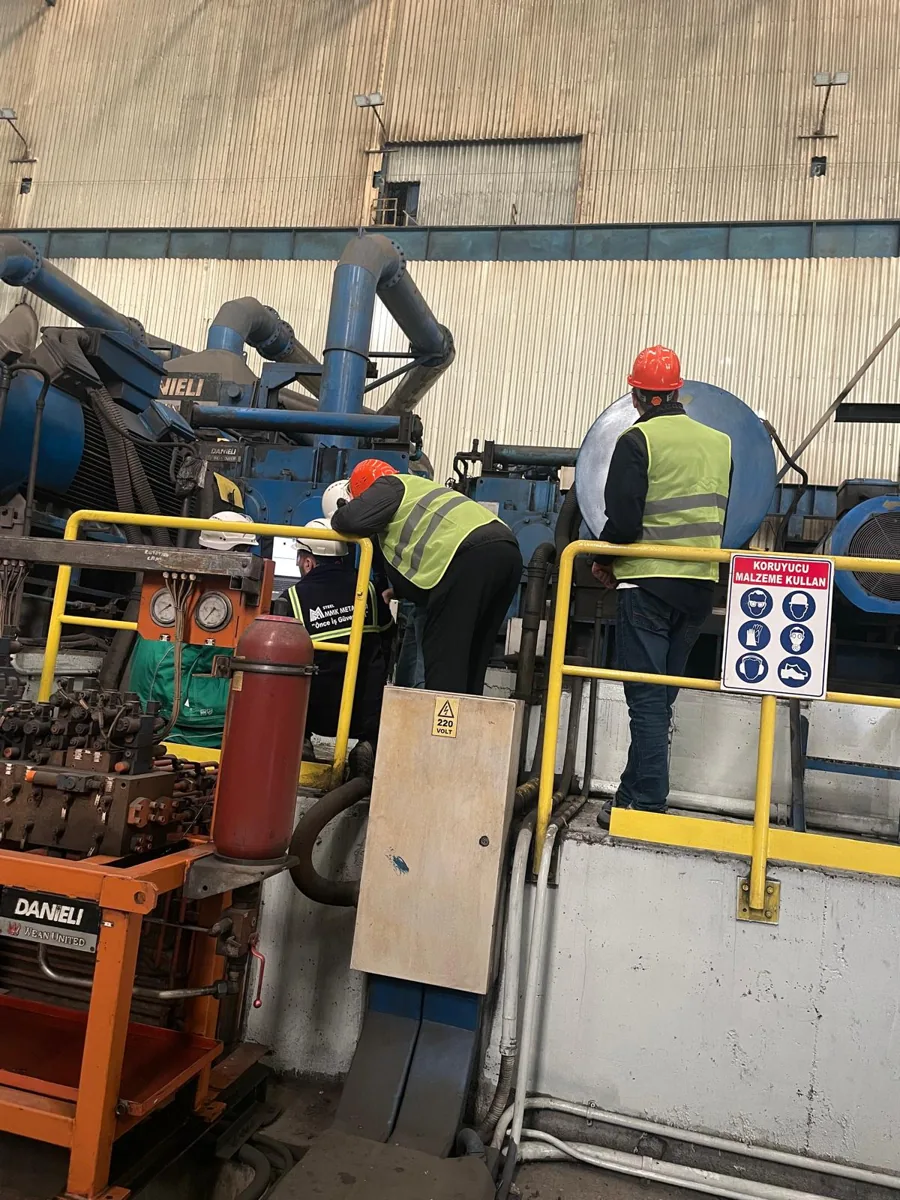
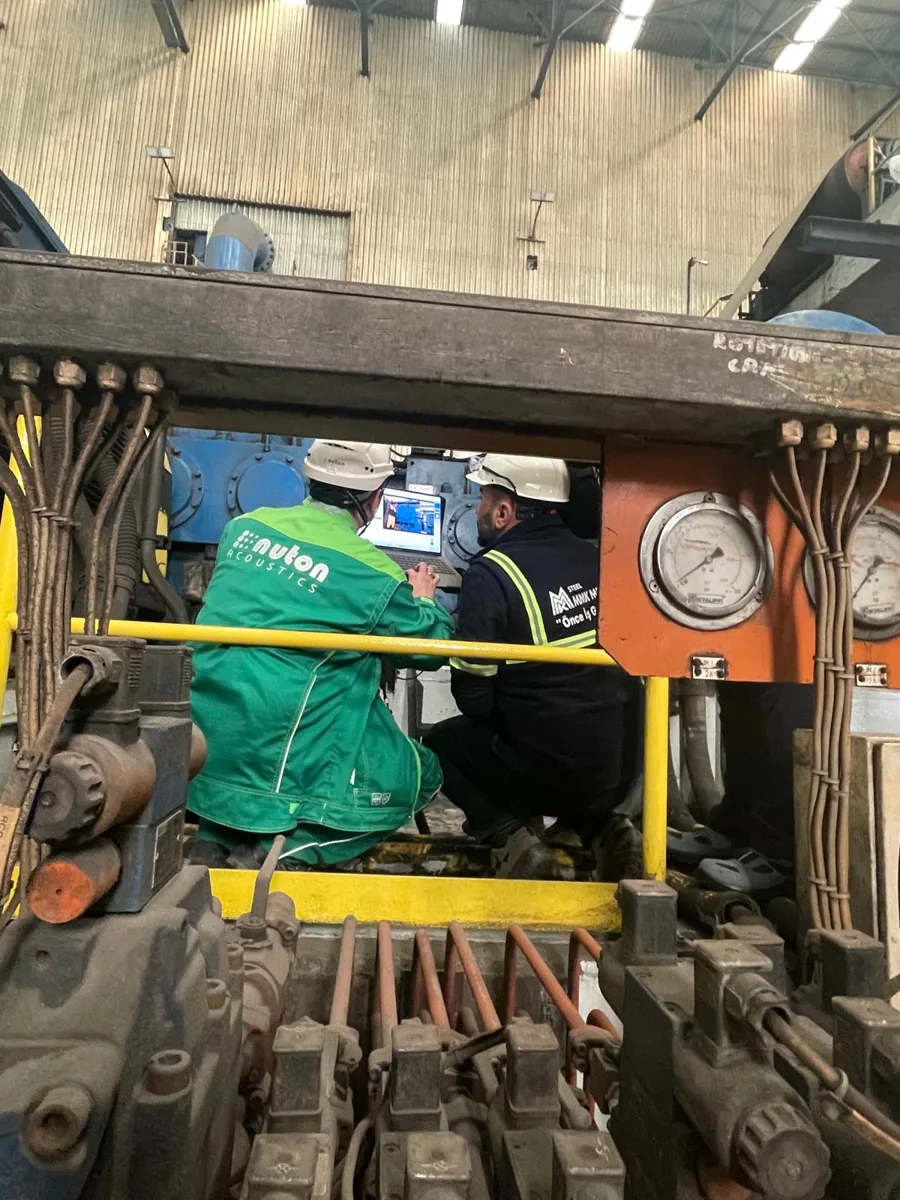
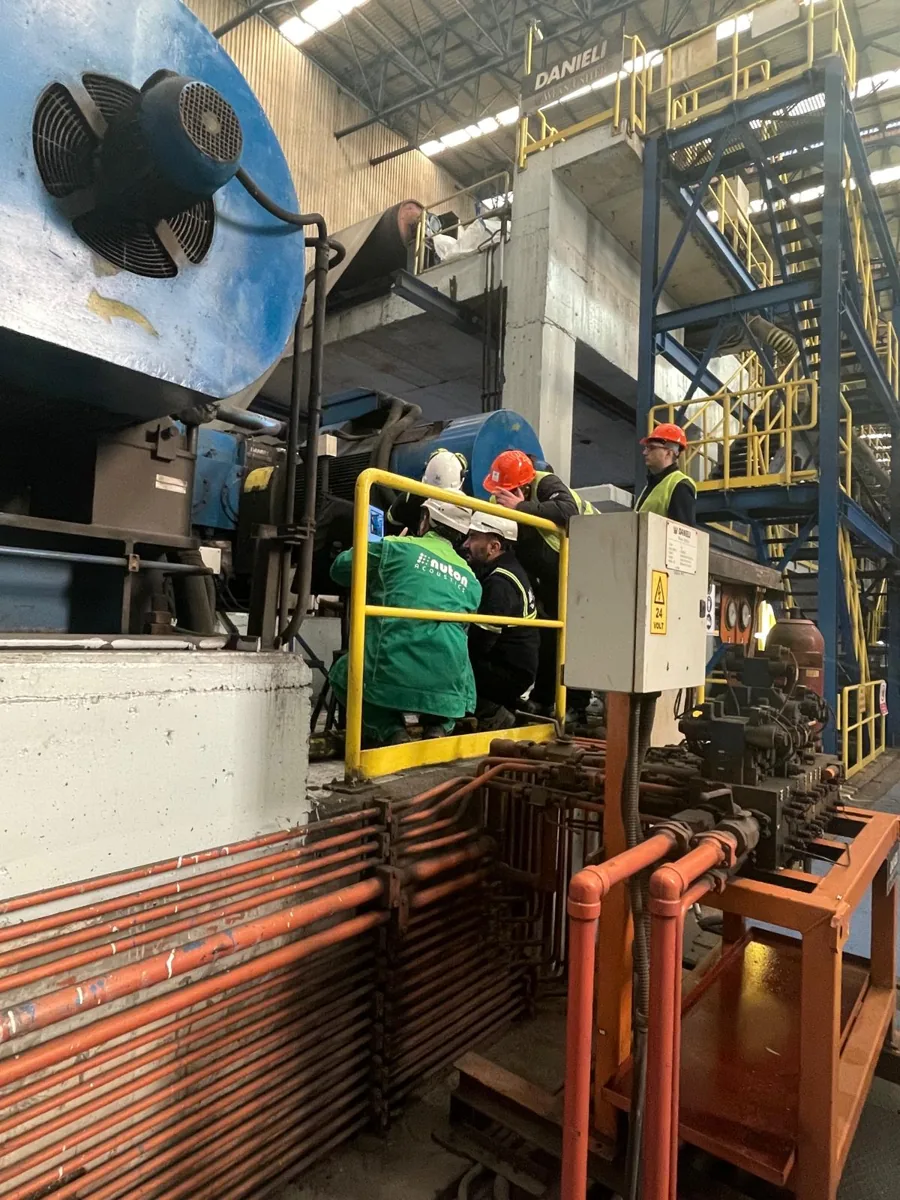
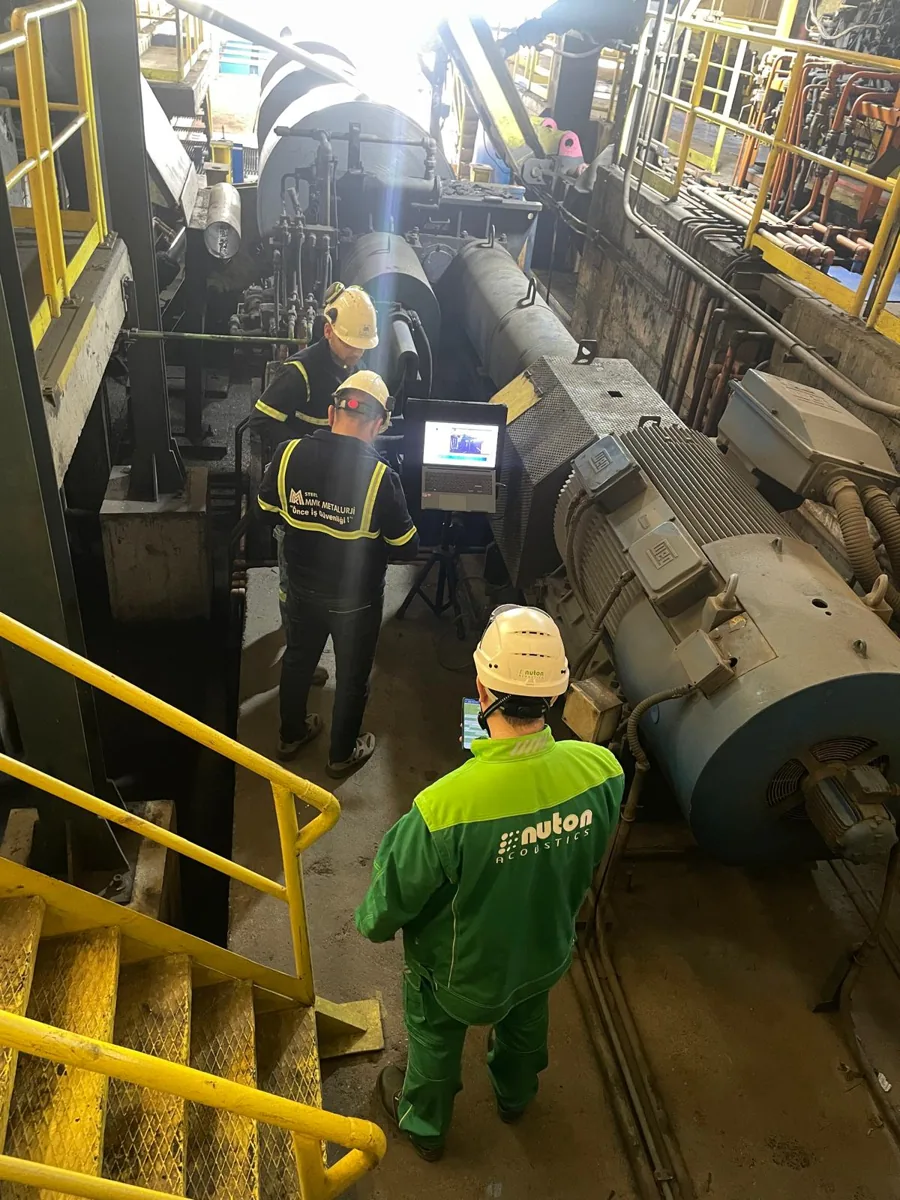
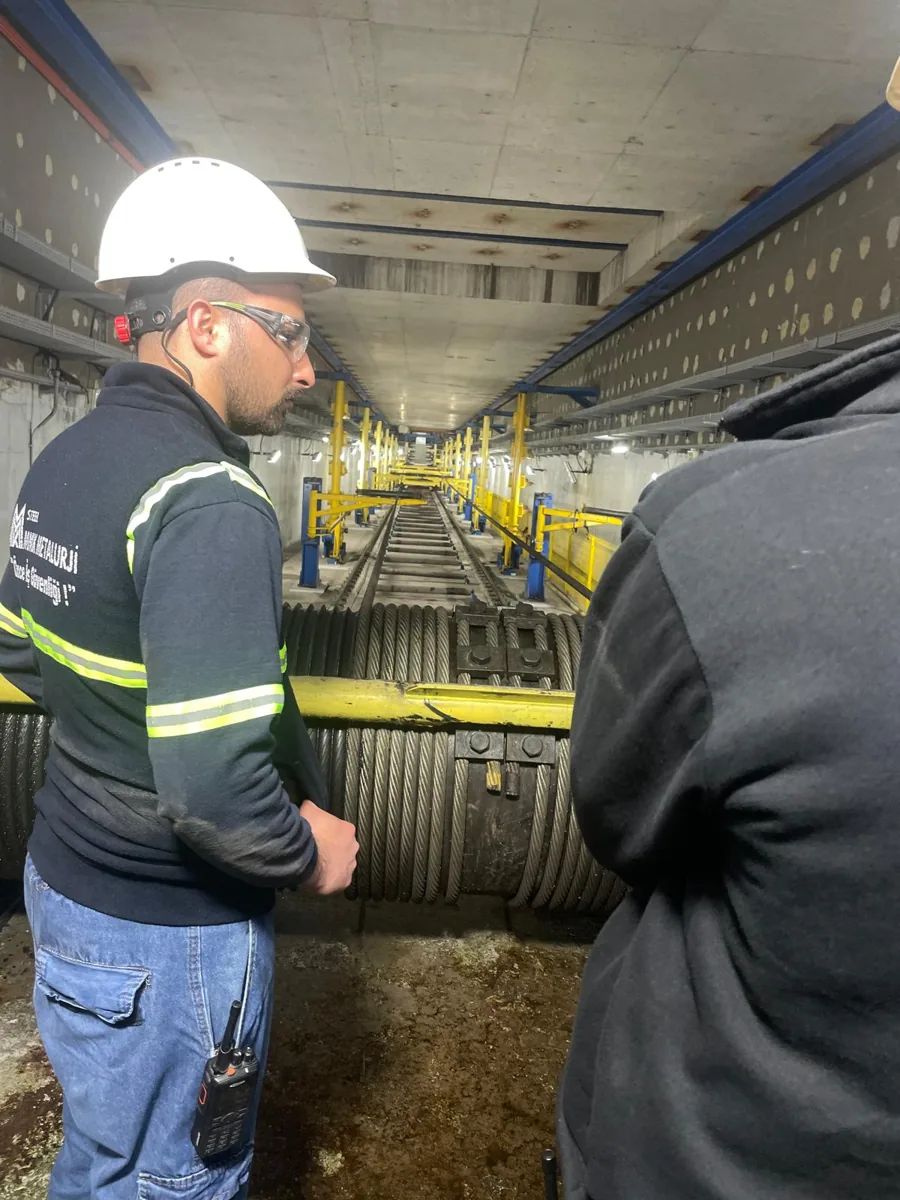
MMK Metalurji field tests
Photographs and a short video from field tests carried out with NAC acoustic cameras at the MMK Metalurji plant while the equipment was running.
Video from the MMK Metalurji field test (13 seconds)
Technical Documents, Visuals and Videos
You can download the product presentation and the data sheet below.
The acoustic camera locates sound sources on the image and detects leaks, partial discharge and mechanical faults without contact while the facility keeps running.
Key Takeaways
Finds faults through sound detection.
Scans without contact and without stopping the plant.
Portable ultrasonic, stationary and portable models; explosion-proof Ex versions.
Let us plan a survey at your facility.
Share the area you want to survey and the type of fault you are looking for, and we will define the right model and measurement plan together.